Making game art with Meshy: hurdles and what finally worked
Meshy helped SpotyQuest make colourful props and animated robot toys. Better results came from narrower references, measured budgets and a repeatable Meshy → Blender → Unreal pipeline. A successful generation was only the beginning.
Project history through 11 October 2026. Credit figures describe recorded batches, not current pricing. Images below are retained references, model-review renders or texture atlases, as labelled.
From impressive source art to usable game art
| Stage | Hurdle | What worked better |
|---|---|---|
| Early hub kit | Dense source geometry and oversized maps. | Measure actual triangles and textures before runtime adoption. |
| Smaller props | A “mobile” description did not define a budget. | T2 smart-topology with explicit face targets; verify the exported triangle count. |
| Texture preparation | Large atlases, UV surprises and a flat-looking texture-only material. | Preserve UVs, reduce maps deliberately, then add controlled toy shading. |
| Animated mascots | Rig compatibility, downloading and clip binding. | Upright biped references, retained rig files, verified local animation files. |
| Precise hands | Holes, lumpy palms, pill fingers and rejected warping. | Reuse authored articulation and procedural joints; keep generation for suitable parts. |
1. Raw density was the first budget failure
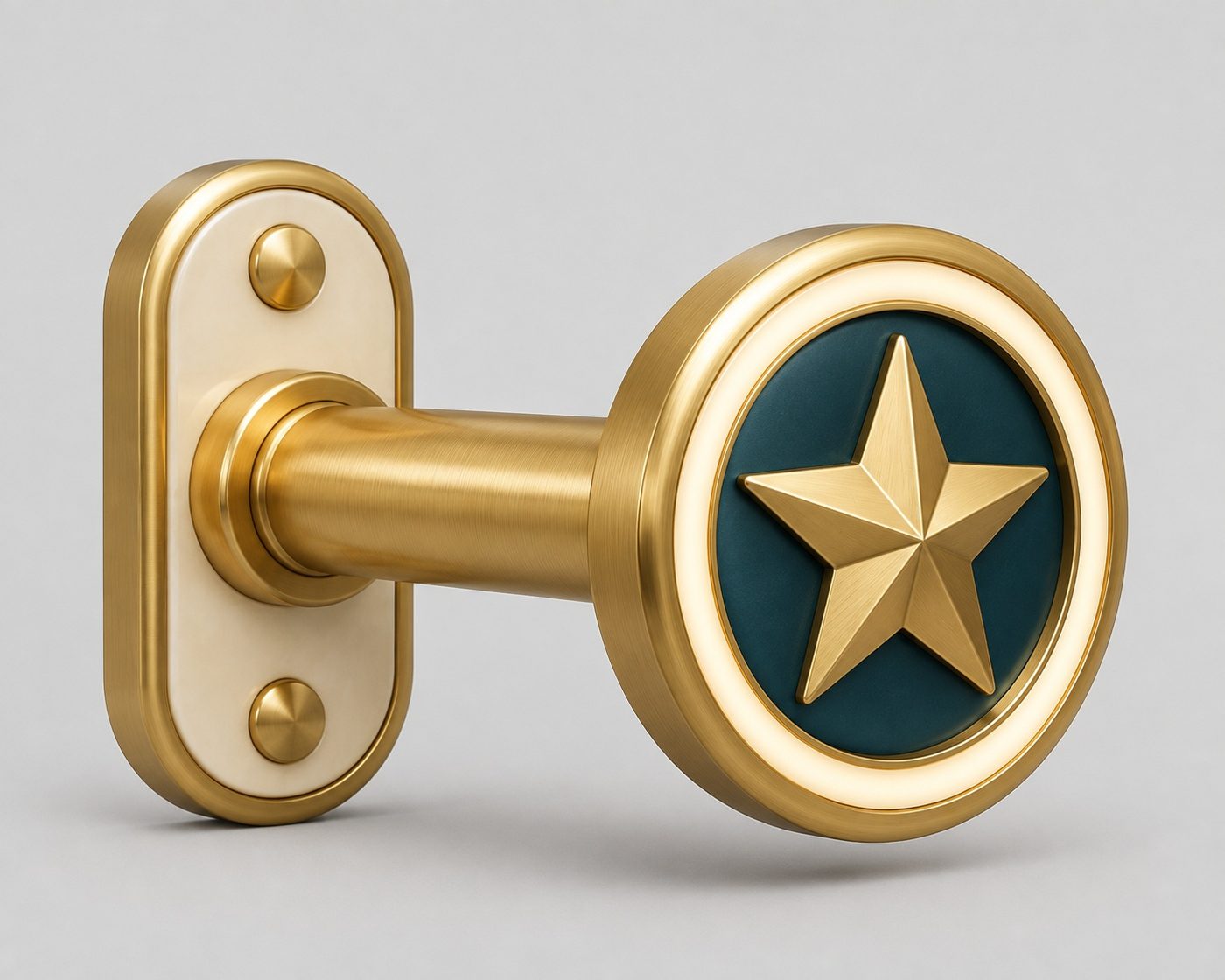 Design reference for the handle; not a screenshot of the dense generated mesh.
| Measured source | Density / size | Consequence |
|---|---|---|
| Seven-piece hub kit | 142,901 triangles, single LODs, 4096px maps | A decorative kit could consume a scene budget. |
| Small door handle | 14,114 triangles, roughly 13 × 25 × 16cm | Far too much detail for its visual role. |
| Small card icon | 26,692 triangles | Repetition multiplies the cost. |
| Portal frame | 36,249 triangles | Three portals plus repeated bezels made the old hub roughly 220k triangles. |
| Later toy blaster | Target 5,000 faces → 5,114 imported triangles | Much smaller, explicitly measured output. |
| Later foam dart | Target 600 faces → 633 imported triangles | A budget suitable for a small repeated projectile. |
The hub plan included remeshing, but the measured runtime assets still exposed raw density. A requested face count, a planned remesh and an imported triangle count are different facts. Disabling remeshing preserves the dense source.
What finally worked: choose a budget per object, request T2 smart-topology for suitable simple props, inspect the silhouette, measure the import and add LODs where needed. The 600–5,000-face examples are this project's later toy batch, not a universal guarantee.
Visual gap: no retained raw-versus-optimised wireframe pair was found for the early hub kit. The measured counts above are the evidence; the handle reference illustrates intent only.
2. References could accidentally request the wrong geometry
| Before: socket-bearing input | Result: unwanted holes |
|---|---|
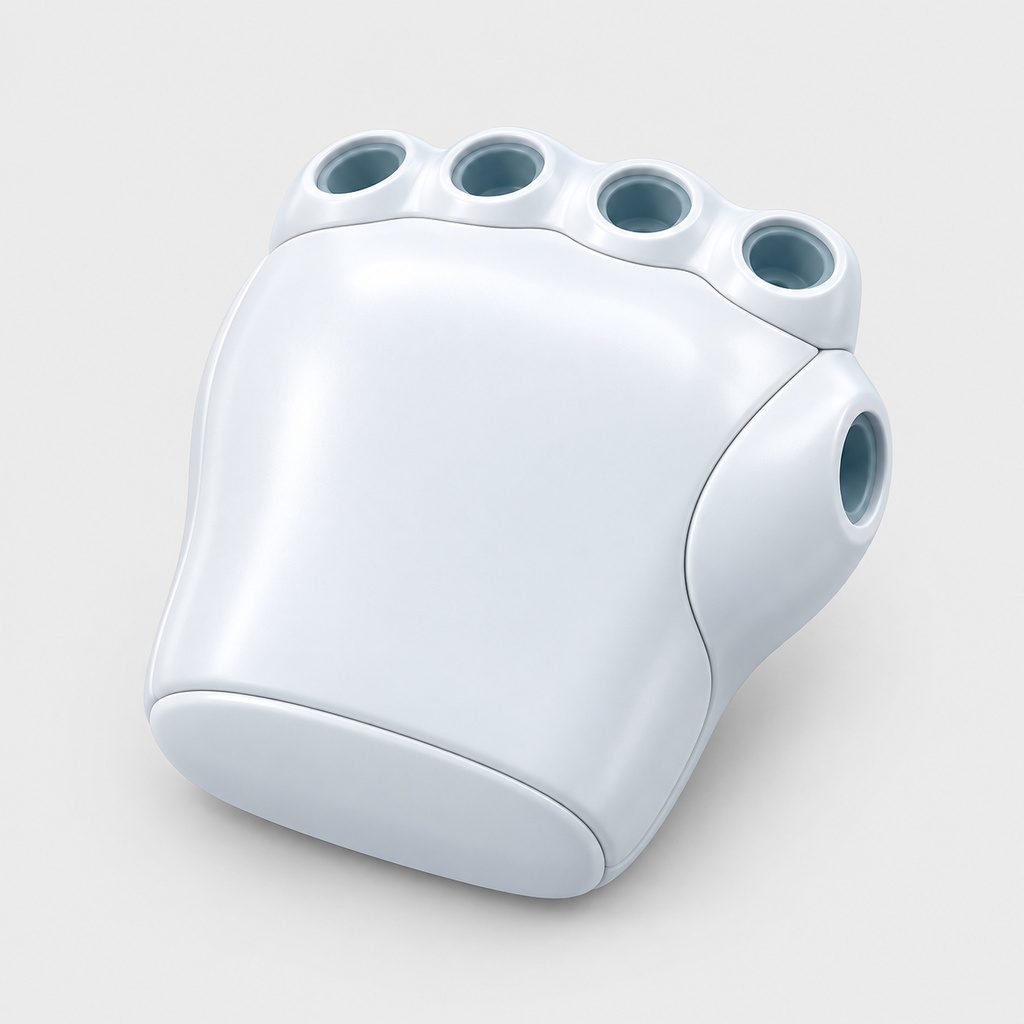 | 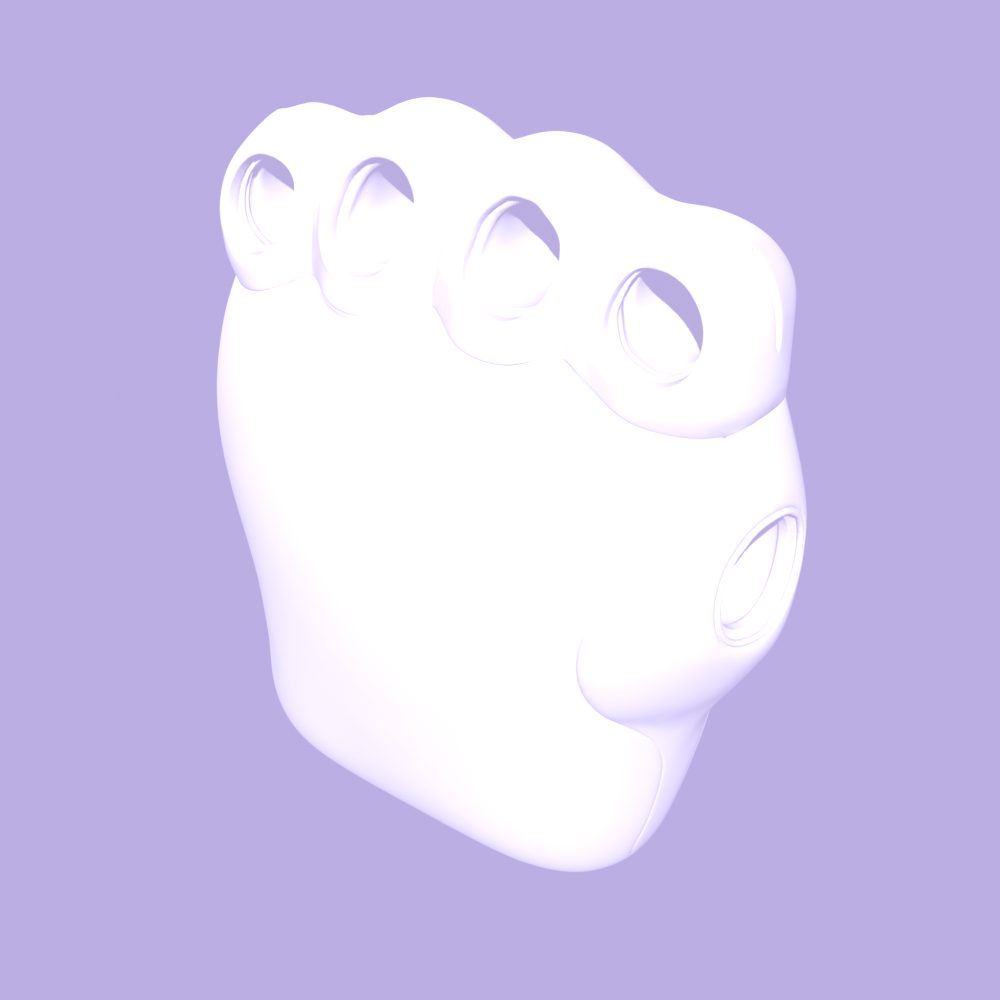 |
| Reference art: rings suggested finger sockets. | Model review: reconstruction made openings through the shell. |
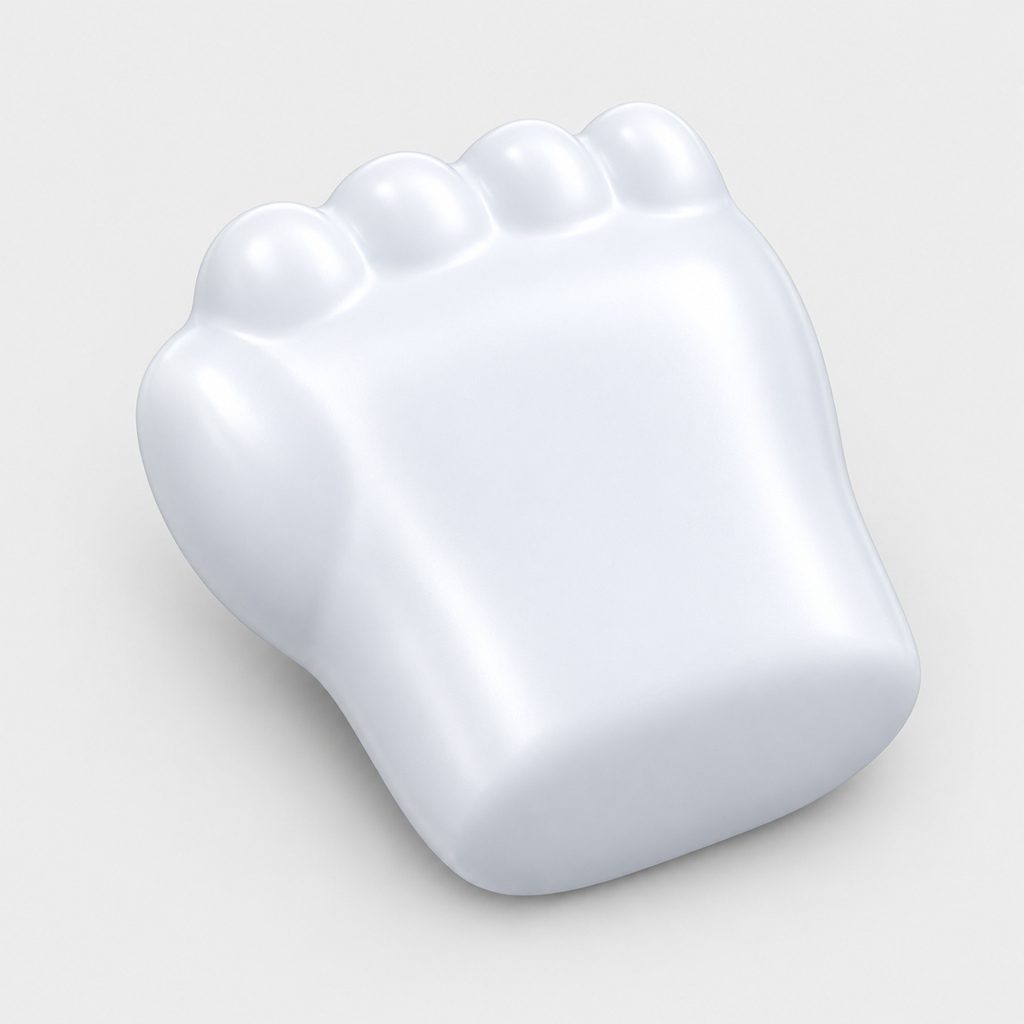 Replacement reference: closed bumps, no ring/socket ambiguity.
A corrected reference removed the holes, but also reversed handedness. Other views disagreed about thumb placement. A cuff reference read as a vase; finger pieces became pills rather than articulated shells.
What worked better: one isolated part, consistent views, explicit closed surfaces, clear handedness and cross-view checks before paying for reconstruction. A whole glove image cannot specify mechanical clearances or control pivots.
3. Meshy palms did not meet this glove's requirements
| Rejected reconstruction | Adopted assembly |
|---|---|
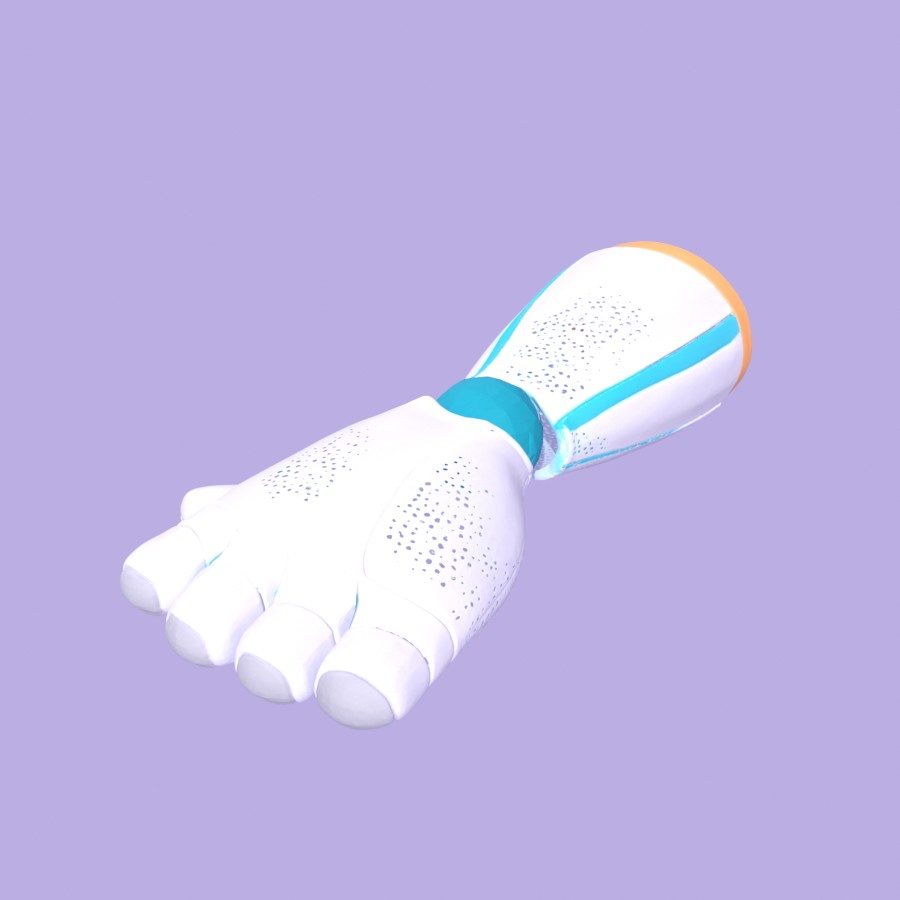 | 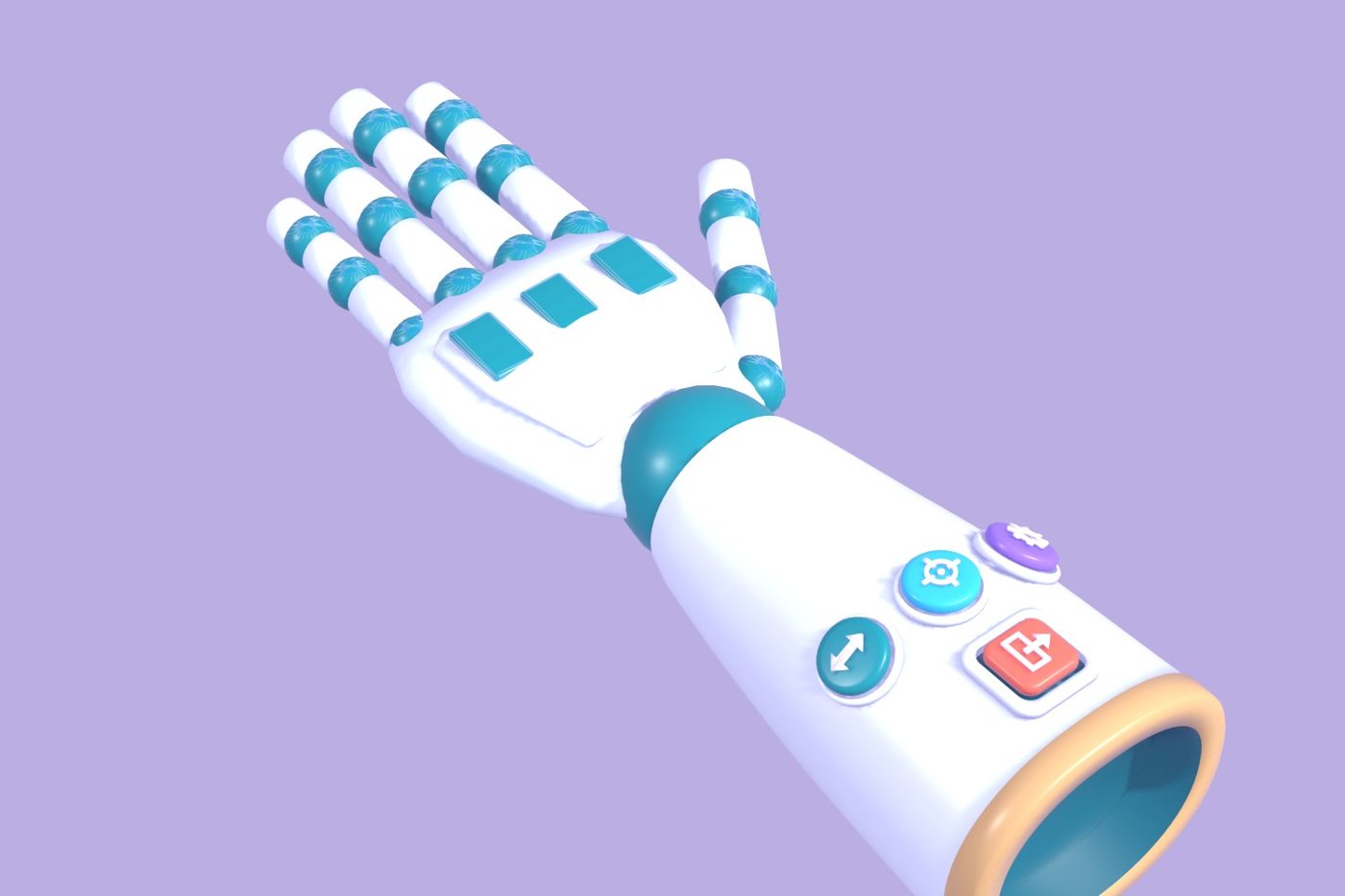 |
| Retained model review: creases and lumpy surfaces. | Retained source render: R2 hand, procedural wrist ball, V4 bracelet. |
Cleaning, decimating, fitting and a separate remesh trial did not produce the desired palm. Blender warping was also rejected. The user chose the existing authored palm, fingers and thumb; the teal wrist sphere remained procedural.
This was a limit of our generated palm trials, not proof that every hand model is impossible. The glove needed rigid parts on a specific joint skeleton, which the humanoid auto-rig workflow did not provide. Existing hand geometry was the better foundation. Preserving corner normals also mattered: dropping them exposed fine creases.
4. Texture size, atlas quality and shading were separate problems
| Step | Decision |
|---|---|
| 4096 → 2048 → 1024 | Move from oversized early hub sources to smaller generation/preparation targets and ordinary runtime maps. This is a pipeline progression, not the history of every individual texture. |
| Preserve the source | Retain original maps; make project-owned runtime copies. Recover a missing texture rather than replacing it with flat colour. |
| Respect UV islands | Check seams, stretched areas, atlas sampling and material assignments. A colourful atlas cannot fix bad mapping. |
| Pack authored parts | Combine palette strips and retained texture regions while preserving each part's UVs. |
| Budget exceptions | r116 robot quality work restored 2048 maps while keeping the 1024 copies. Treat this as a scoped quality trial, with target-device performance still to verify. |
| Source robot atlas: 2048px | Prepared copy: 1024px |
|---|---|
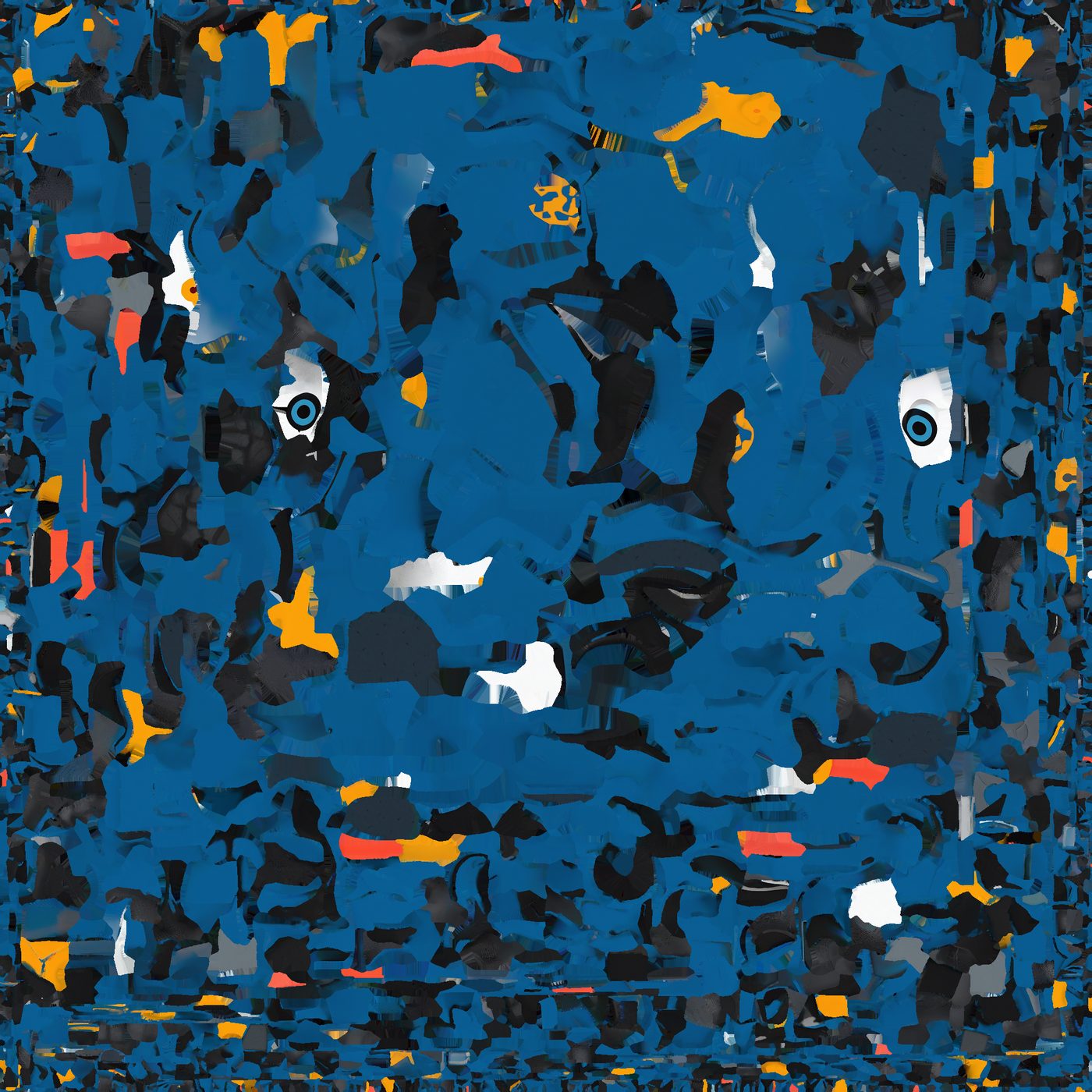 | 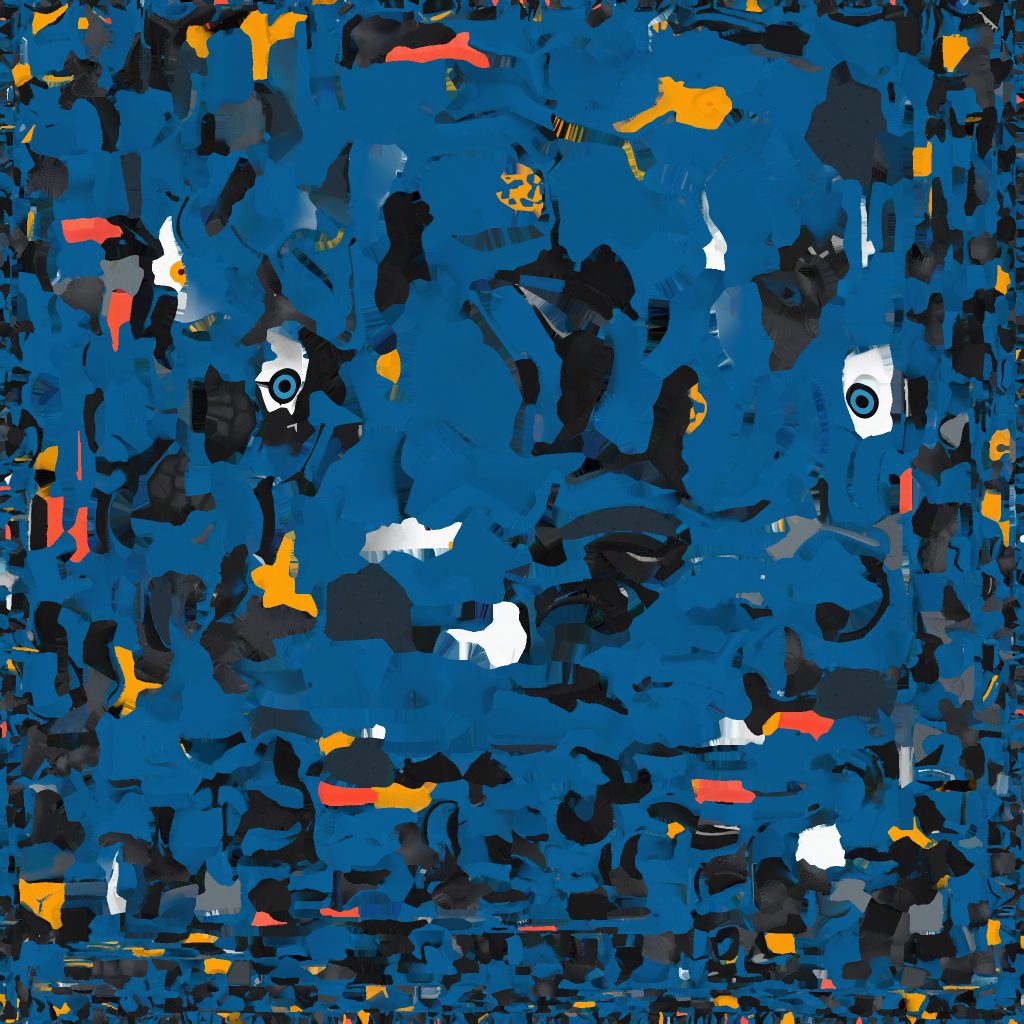 |
| Original texture layout. Web copy is reduced for this page. | Same layout, fewer source texels. |
These web-sized copies are not a fair pixel-detail benchmark. They show that the atlas survives preparation.
 Authored glove atlas: packed regions rather than one material per part.
The robot's base-colour-only presentation looked flat. r116 rebuilt its material as an unlit toy shader: viewer-side key shading, wrapped diffuse, roughness-driven highlights and a rim, with the 0.17 luminance floor retained. Normal and roughness maps became useful because this shader explicitly consumed them; maps that a simple unlit shader never reads only add weight.
Visual gap: no close-up, same-pose before/after shader pair was found in the requested asset folders. Texture atlases above do not prove the final material's appearance on the headset.
5. Orientation, scale and pivots were not trustworthy defaults
| Surprise | Measured correction |
|---|---|
| Blaster muzzle pointed along −X | Measure from the grip vertices; apply a 180° body yaw so gameplay fires along its expected direction. |
| Dart's length axis was Y | Turn it onto the projectile's forward axis. Do not assume a generic Z-axis correction covers it. |
| Blender FBX Y is mirrored in Unreal | Compare against the documented handedness conversion. Taking absolute Y would hide a real placement error. |
| Generated origin did not equal a grip pivot | Set or document the grip/rest placement, using measured bounds and sockets. |
| Independent-axis stretching changed proportions | Use uniform source scale or a deliberate rebuild. Keep analytic collision independent of visual proportions. |
| Blaster texture source | Dart texture source |
|---|---|
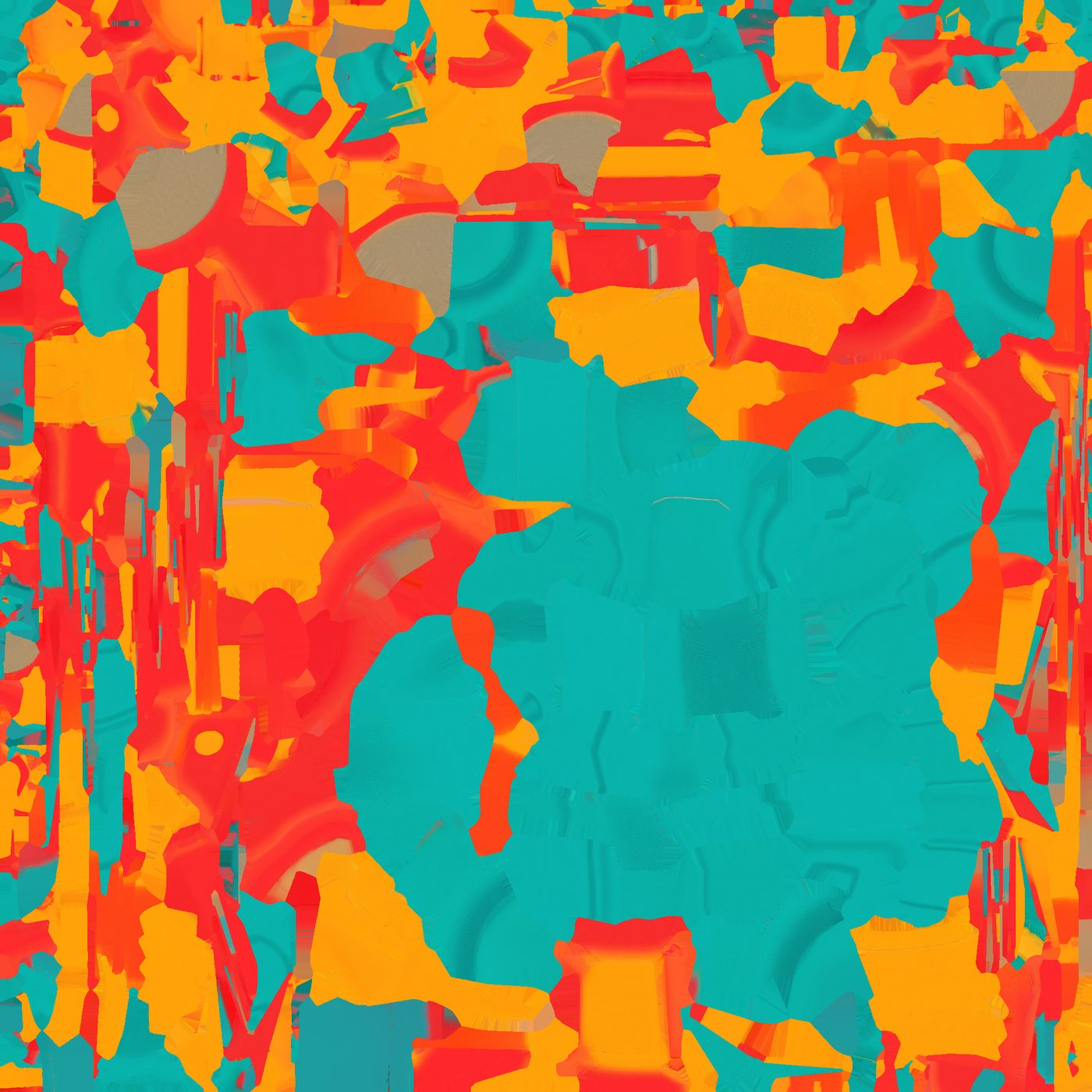 | 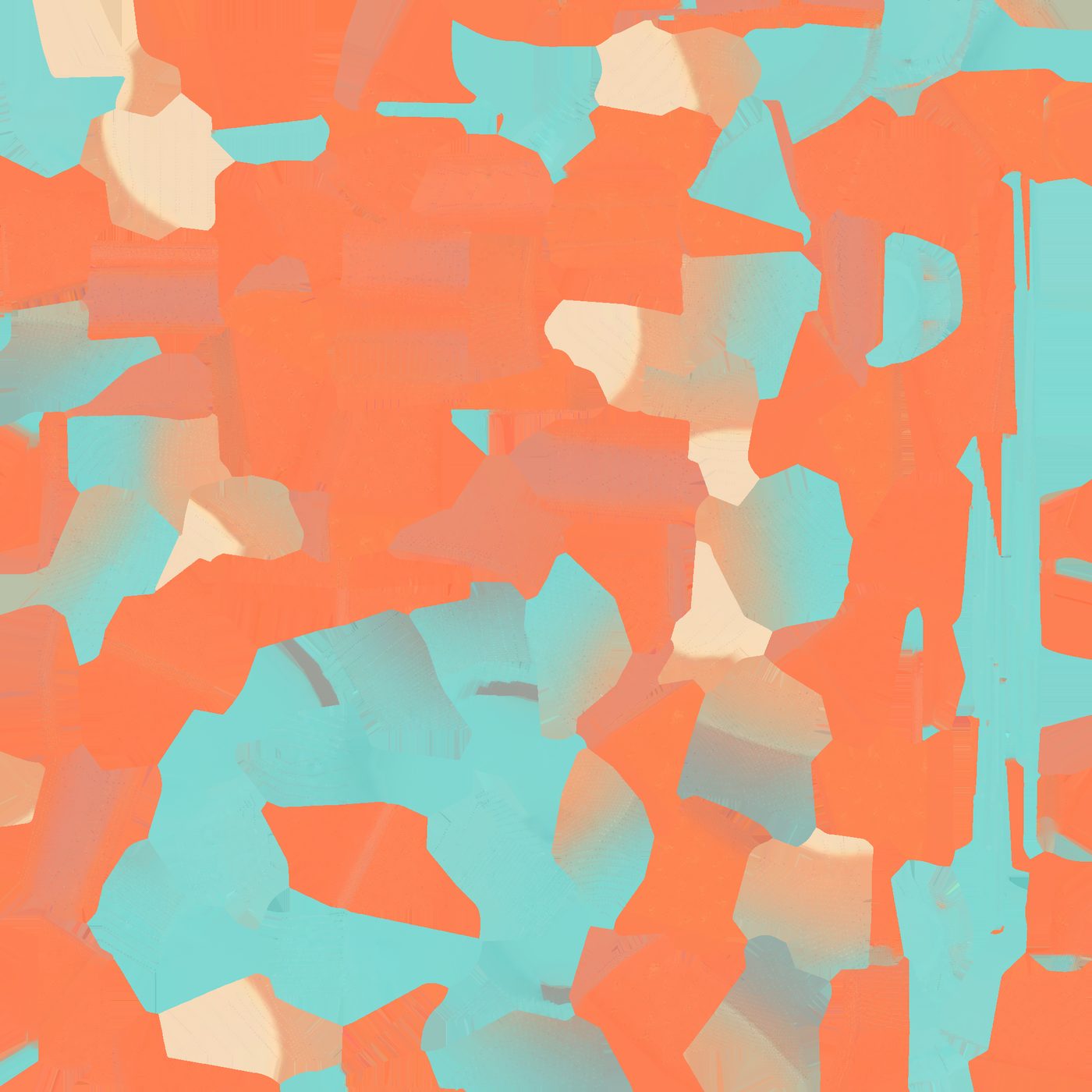 |
| 2048px source; runtime maximum 1024px. | 2048px source; runtime maximum 512px. |
Atlases, not object renders. No source-folder orientation comparison image was found; imported measurements establish the corrections.
6. Rigging succeeded when the character matched the workflow
Early cat/chicken studies were upright bipeds to suit humanoid rigging. The direction then changed to friendly robots; successful animal generations stayed draft sources. A completed task did not imply adoption.
| Animation step | Recorded result |
|---|---|
| Robot rigging | Two successful rigs; walking included without an extra animation charge. Running also came from the rig's basic clips. |
| Wave | Two library clips, 3 credits each. |
| Two dances per robot | Four clips, 3 credits each, 12 total. |
| Hit reaction | Two clips, 3 credits each, 6 total. |
| Gameplay binding | Touch cycles dances; throws, returns and projectile hits use appropriate clips. Desktop checks passed; unscripted headset acceptance remained open. |
The download helper returned temporary signed download links but did not save the animation files. The pipeline fetched the files explicitly, then recorded local size and checksum before import. A successful task response is not a durable asset archive.
7. Keep the credit ledger as carefully as the asset files
| Separate ledger / checkpoint | Recorded accounting |
|---|---|
| Early hub plan | 30 credits generation + 5 remesh per asset; 245 planned for seven. A plan is not a confirmed debit. |
| Interactive content | 260 confirmed, plus 10 reserved for an unexplained balance reduction, within a 500 ceiling. |
| Wave → dance → toy batch | 266 → 278 → 314 confirmed; the final batch was 30 for two toys plus 6 for hit clips. |
| Glove-part experiment | 175 recorded in its own ledger; several paid parts were rejected. Do not merge separate authorisations into one allowance. |
Store the prompt, reference, settings, result, rejection reason, actual debit and retained files. Account for rejected experiments. Keep planned spend, confirmed spend and unexplained differences distinct.
The pipeline we would repeat
| Order | Deliverable | Validation |
|---|---|---|
| 1. Reference | Approved subject and isolated views | Silhouette, palette, handedness, consistent parts; no unwanted holes. |
| 2. Generate | Budgeted mesh and source maps | Actual density, completeness, usable textures; record the debit. |
| 3. Download | Local FBX/GLB, maps, rig and clips | Files exist, sizes/checksums recorded; no temporary links in public records. |
| 4. Blender | Clean source, UVs, normals, measured pivots | Remove floaters, retain texture mapping, preserve proportions; separate moving parts. |
| 5. Export | Measured manifest and FBX | Units, axis conversion, uniform scale, grip/rest pivots and material mapping. |
| 6. Unreal | Project-owned meshes, textures and materials | Read back bounds, triangles, LODs, slots, skeleton and animation bindings. |
| 7. Review | Repeatable captures and interaction checks | Compare to the reference; test grabs, presses, articulation and loss/recovery. |
| 8. Headset | Real use and worst-case scene check | Visible textures, legible surfaces, comfortable interaction and measured performance. |
Evidence basis: retained generation logs, hub-kit measurements, glove part verdicts, robot/animation records, toy import measurements and development checkpoints. These lessons describe this project's results; no new generation or missing comparison image was fabricated.